The definition of healthy eating is changing.
For years, better-for-you products were frequently marketed around what they did not contain: less sugar, fewer calories, reduced fat, or fewer artificial ingredients. Today, consumers are increasingly looking at what a product can add to their diet.
Protein and fiber are becoming two of the clearest examples of this shift.
From high-protein snacks and beverages to fiber-forward foods, consumers are showing greater interest in products designed around nutrition, convenience, satiety, digestive wellness, and everyday functionality.
For retailers, this creates an important opportunity. The next generation of better-for-you products is not necessarily confined to a dedicated health aisle. These products are appearing throughout the store, creating new ways to strengthen assortments and respond to evolving consumer priorities.
For brands, the challenge is turning that demand into sustainable retail growth.
At LCX Distributors, our mission is to deliver better-for-you, high-demand products efficiently and at scale—helping brands grow and retailers win.
Why Are Consumers Looking for More Protein and Fiber?
Consumers are becoming more intentional about food.
Instead of evaluating products exclusively around calories or traditional nutritional claims, many shoppers are looking for foods that align with specific lifestyle goals.
Protein is associated with benefits such as satiety, muscle support, and active lifestyles, while fiber is increasingly connected with digestive wellness and everyday nutrition.
The result is a market in which nutritional functionality can influence purchasing decisions across multiple categories.
According to NielsenIQ, protein and fiber were among the major themes shaping food and beverage innovation in 2026, alongside metabolic wellness, gut health, ingredient transparency, and functional nutrition.
The significance for retailers is clear: shoppers are increasingly interested in products that communicate a recognizable nutritional purpose.
High-Protein Foods Are Expanding Beyond Traditional Categories
Protein is not a new nutritional trend.
What is changing is where consumers expect to find it.
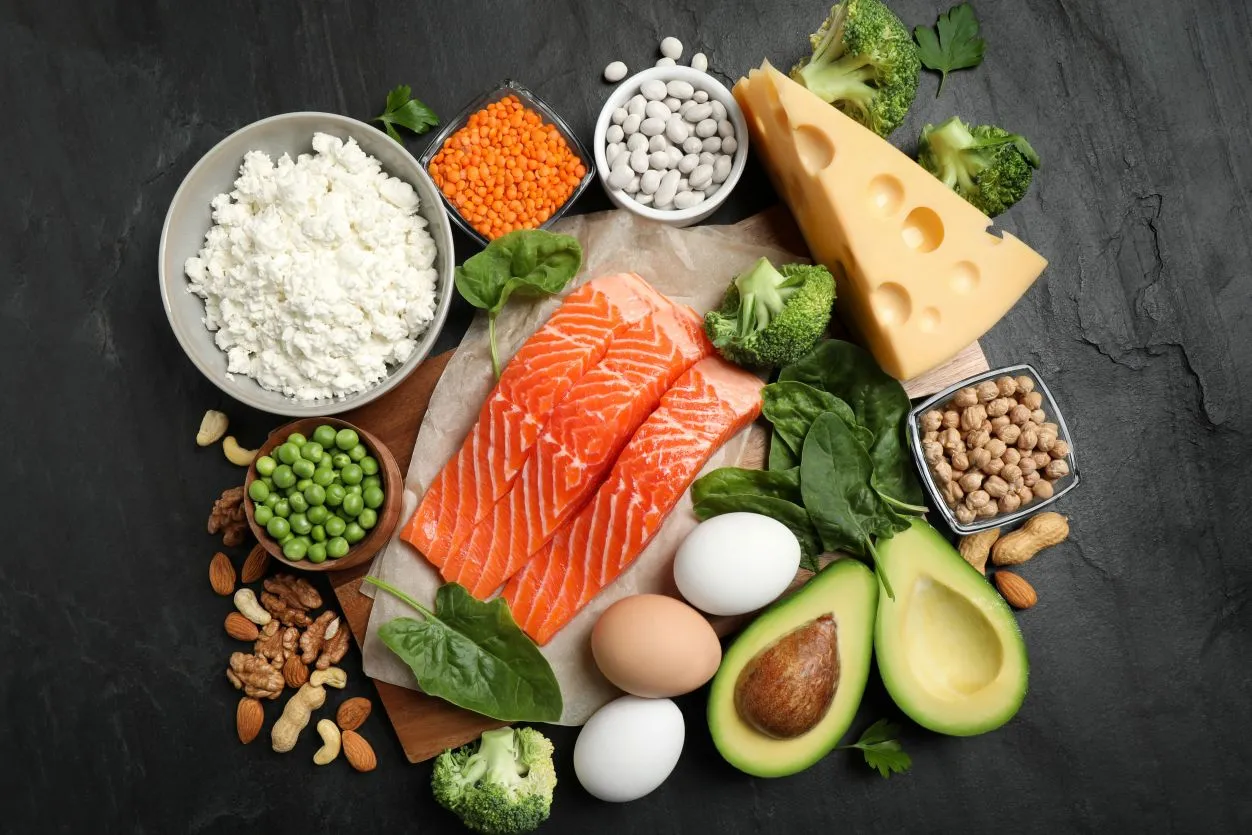
Historically, high protein foods were strongly associated with categories such as meat, dairy, protein powders, and sports nutrition.
Today, protein is appearing across a much broader retail landscape.
Consumers can find protein-focused:
- Snacks and bars
- Beverages and shakes
- Breakfast products
- Yogurts and dairy alternatives
- Pantry staples
- Baked goods
- Convenience foods
- Better-for-you indulgent products
This expansion matters because protein is moving beyond the fitness consumer.
It is increasingly positioned around everyday convenience, nutrition, fullness, and lifestyle.
Recent NIQ research on snacking found that protein remains a leading benefit consumers seek, with 60% of surveyed consumers actively trying to consume more of it every day.
For retailers, that means protein can influence assortment strategy across multiple aisles rather than operating as a single specialized category.
Fiber Is Emerging as the Next Major Opportunity
Protein may receive more consumer attention, but fiber represents another important growth opportunity.
NielsenIQ reports that more than one-third of shoppers are actively trying to increase their fiber intake, while products making fiber claims continue to outperform the broader food and beverage industry.
That creates an interesting opportunity for brands and retailers.
Fiber can be incorporated into familiar, frequently purchased categories, making it easier for consumers to turn nutritional intentions into everyday habits.
Beverages, yogurts, snacks, breakfast foods, bakery products, and pantry items can all become vehicles for fiber-focused innovation.
For retailers, the opportunity is not necessarily to create a separate “fiber section.”
It is to identify products that integrate desirable nutritional attributes into categories consumers already purchase regularly.
The New Wellness Consumer Wants Products That Do More
One of the most important changes happening in food and beverage is the transition from restriction toward functionality.
Consumers historically encountered products marketed as low-fat, low-calorie, sugar-free, or reduced-sodium.
Those attributes remain relevant, but the market is becoming more sophisticated.
Today’s wellness consumer may simultaneously look for:
- More protein
- More fiber
- Lower sugar
- Cleaner ingredients
- Digestive support
- Convenience
- Great taste
- Transparent labeling
In other words, a single nutritional claim may no longer be enough.
Consumers increasingly expect products to solve several needs at once.
This trend is creating what the industry sometimes describes as stacked functionality: products that combine multiple desirable attributes within one convenient format.
A beverage, for example, might combine hydration with protein. A snack could combine protein and fiber. A breakfast product could offer fiber alongside reduced sugar and recognizable ingredients.
This evolution creates opportunities for innovative brands that can communicate their value clearly.
It also makes product selection more complex for retailers.
From “Better-for-You” to “Better-for-Me”
The wellness market is becoming increasingly personalized.
Consumers do not necessarily share the same definition of healthy.
An active consumer may prioritize protein. Another shopper may focus on fiber and digestive wellness. Someone else may prioritize reduced sugar, plant-based ingredients, or simple ingredient lists.
This means retailers need assortments capable of serving different wellness priorities without creating unnecessary complexity.
The most successful products can make their purpose easy to understand.
What is the product?
Who is it for?
What benefit does it provide?
Why should a shopper choose it over another option?
Products that answer these questions quickly have an advantage in increasingly crowded categories.
This connects directly with the broader shift toward functional foods and beverages, where nutritional benefits are becoming part of the core consumer value proposition.
GLP-1 Is Also Changing Food and Beverage Demand
The rapid adoption of GLP-1 medications is adding another dimension to the wellness market.
Consumers using these medications often eat differently, increasing the relevance of smaller portions and foods that provide meaningful nutrition.
According to NielsenIQ, GLP-1 users are helping accelerate consumer focus on protein, fiber, probiotics, nutrient-rich foods, and simpler ingredients.
For food brands, this creates opportunities for innovation.
For retailers, however, the important lesson is broader than GLP-1 itself.
Consumers are becoming more selective about what earns a place in their daily diet.
When shoppers eat less or purchase more intentionally, every product must provide a stronger reason to be chosen.
That puts greater emphasis on nutritional value, functionality, taste, convenience, and transparency.
Taste Still Determines Repeat Purchase
Nutrition can generate attention.
Taste generates repeat purchases.
This distinction is critical for both retailers and emerging brands.
A high-protein or fiber-rich product may attract an initial purchase because of its nutritional positioning, but consumers are unlikely to continue purchasing it if taste, texture, convenience, or overall experience disappoints.
Retailers therefore need to evaluate more than nutritional claims.
A promising better-for-you product should balance:
- Consumer relevance: Does the product respond to a meaningful consumer need?
- Taste and experience: Will consumers want to purchase it again?
- Clear positioning: Can shoppers quickly understand its benefit?
- Appropriate pricing: Does the perceived value justify the price?
- Reliable availability: Can the brand and distributor support ongoing demand?
The strongest retail products sit at the intersection of consumer demand and operational execution.
Digital Discovery Is Raising Consumer Expectations
Consumers are also becoming more informed.
Social media, wellness creators, ingredient-scanning applications, ecommerce reviews, podcasts, AI tools, and online nutritional content give shoppers access to more product information than ever before.
That creates a new challenge for brands.
Claims need to be understandable and credible.
Consumers can quickly research ingredients, compare alternatives, read reviews, or discover competing products.
NIQ’s 2026 research found that a quarter of surveyed consumers use third-party scanning apps to evaluate ingredients, while social media has become an important food and beverage discovery channel.
This means brands increasingly need to win twice: during digital discovery and again when the consumer reaches the shelf.
For retailers, working with products that combine compelling positioning with credible attributes can become increasingly important.
Retail Demand Must Be Supported by Distribution
Consumer demand is only one part of retail success.
A product can be nutritionally relevant, beautifully branded, and highly visible online while still failing to scale.
Retail growth requires infrastructure.
When an emerging food or beverage brand begins gaining traction, it must be able to manage inventory, replenishment, warehousing, transportation, retailer requirements, and potentially international market expansion.
This is where distribution becomes a strategic growth capability.
At LCX Distributors, we help connect high-demand products with retail opportunities while providing brands with access to the infrastructure required to scale.
Brands looking to expand can learn more about working with LCX through our supplier distribution solutions.
What Should Retailers Look for in High-Protein and High-Fiber Products?
Retailers should avoid approaching protein and fiber simply as claims to add to the shelf.
The stronger strategy is to understand why a particular product deserves consumer attention.
A product with long-term potential should ideally combine nutritional relevance with strong branding, taste, convenience, pricing, and dependable supply.
Retailers should also consider how the product fits within existing shopping behaviors.
Can it replace an existing choice with a better-for-you alternative?
Does it create a new consumption occasion?
Can consumers understand its value immediately?
Does it complement other products within the assortment?
And, importantly, can demand be supported consistently if the product performs?
LCX Distributors works with retailers seeking better-for-you and high-demand products while helping connect product innovation with scalable distribution.
What Comes After the Protein Boom?
Protein is likely to remain highly relevant, but the broader market is already evolving.
Consumers are beginning to look beyond single-attribute products.
Fiber, digestive wellness, ingredient quality, nutrient density, convenience, and functional combinations are becoming part of the same conversation.
NIQ describes this broader change as a shift from wellness based primarily on avoidance toward wellness based on optimization—consumers increasingly want products that actively contribute something useful to their lives.
That may be one of the most important signals for retailers.
The future is not simply high-protein food.
It is food and beverage designed around increasingly specific consumer expectations.
Turning Wellness Demand Into Retail Growth
High-protein and high-fiber products demonstrate how quickly consumer expectations can reshape retail.
Shoppers increasingly want products that combine taste, convenience, nutrition, transparency, and functionality.
Brands capable of delivering those attributes have an opportunity to grow.
Retailers capable of identifying the right products have an opportunity to differentiate their assortments.
But connecting the two requires efficient distribution.
LCX Distributors focuses on delivering better-for-you, high-demand products efficiently and at scale, helping emerging and established brands reach new markets while helping retailers respond to the products consumers increasingly want.
Because identifying the next consumer trend is only the beginning.
The real opportunity comes from getting the right product onto the right shelf, at the right time, and creating the infrastructure to keep it there.
Connect with LCX Distributors to explore opportunities for your brand or retail business.